Holistic Interior Restoration: Systematic Assessment & Craft Re-Assembly
Restoring an automobile’s cabin requires understanding how dozens of separate components—each made from distinct natural and synthetic materials—must harmonize under real-world vibration and thermal stress.
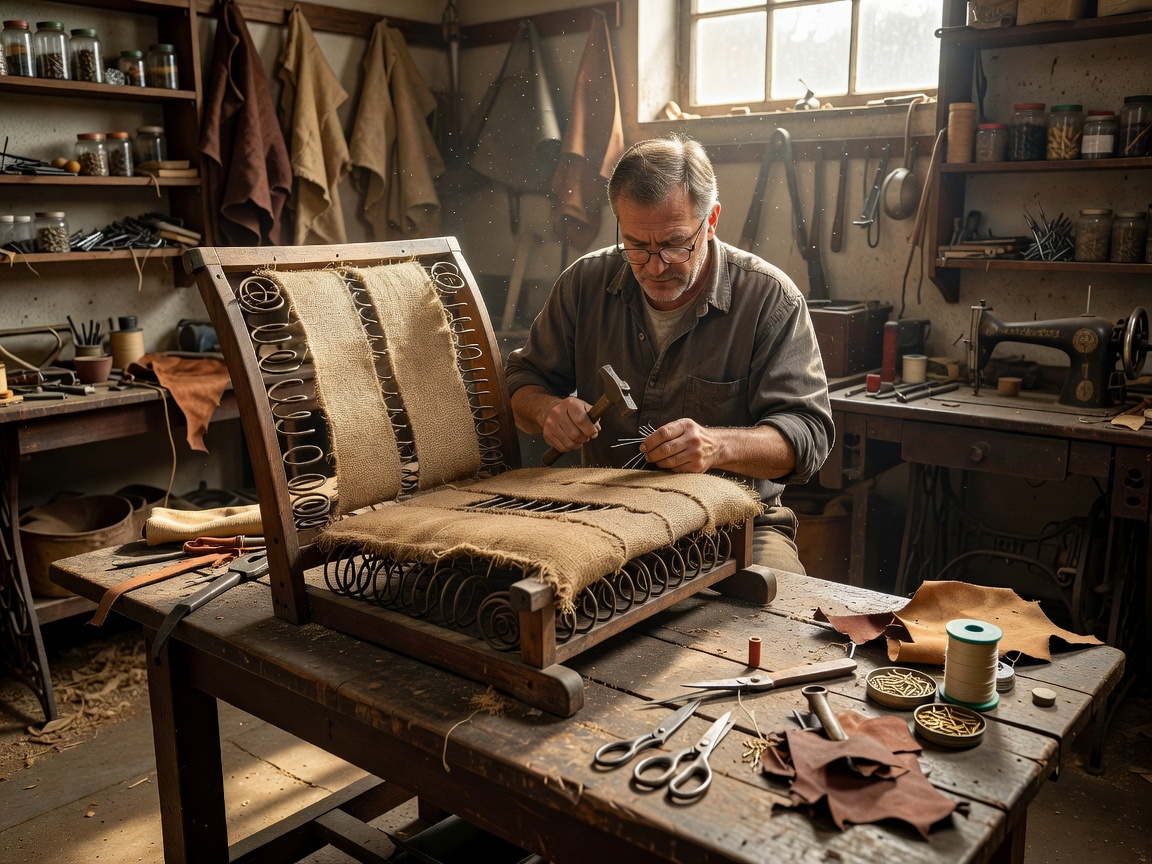
The Architecture of an Automotive Interior
When an owner steps into a classic luxury automobile, the immediate impression is one of sensory richness: the aroma of vegetable-tanned hides, the warm luster of burr walnut facias, the sound dampening of deep-pile wool carpeting, and the crisp feel of knurled switchgear. Yet beneath these visible surfaces lies a complex, multi-layered mechanical assembly.
A true interior restoration isn’t just about cleaning seats or swapping carpets. It involves addressing steel seat frames that have suffered metal fatigue, replacing disintegrated jute acoustic underlays, testing wire harnesses behind dashboards, and ensuring door moisture barriers are completely water-tight before mounting hand-tailored door cards.
Initial Inspection & Condition Documentation
Before a single screw is loosened, an experienced restorer creates a rigorous condition logbook. Vehicles from the 1950s through the 1990s often feature unique assembly quirks, hand-fitted shims, and previous aftermarket interventions that must be carefully documented.
- Photographic Grid Mapping: Documenting every seam angle, door card reveal gap, piping tension, and dashboard bezel alignment under neutral studio lighting.
- Fastener Categorization: Distinguishing original period zinc, cadmium, or black-oxide fasteners from later, incorrect hardware replacements.
- Substrate Stability Testing: Assessing whether pressed fiberboard door panels have buckled due to water ingress or if structural wire springs in seat bases have fractured.
- Odor & Moisture Analysis: Identifying whether damp smells originate from heater core seepage, deteriorated windscreen gaskets, or mold within the horsehair cushioning.
The Critical Sequence of Disassembly & Re-Assembly
Restoration projects often fail when parts are removed haphazardly. Interior components rely on specific overlap geometries. For example, in many classic grand tourers, the headliner must be tensioned and glued around the windscreen aperture before the front windscreen glass and timber A-pillar trims can be installed.
| Restoration Stage | Core Objective | Common Risk If Rushed |
|---|---|---|
| 1. Cabin Stripping | Gentle extraction of seats, console, door trim, carpets, and headliner down to the bare painted floor pan. | Snapping brittle plastic clips or tearing original vinyl perimeter flaps. |
| 2. Chassis Cleaning & Sound Insulation | De-rusting floor pans, applying modern acoustic butyl dampers and closed-cell thermal foam. | Trapping moisture under carpets or adding excessive thickness that prevents seat tracks from seating flat. |
| 3. Headliner & Loom Installation | Running interior harness wiring, tensioning roof bows, and bonding headlining cloth. | Wrinkling fabric or trapping unverified electrical harnesses behind fixed headliners. |
| 4. Carpeting & Center Console | Tailoring bound wool carpets, setting floor fasteners, securing console brackets. | Misaligned shifter surrounds or carpet bunching around pedal linkages. |
| 5. Door Cards & Seating | Fitting rebuilt seat assemblies, hooking mechanical linkages, water-sealing door skins. | Damaging newly restored seat bolsters against door apertures during installation. |
Preservation vs. Replacement: Making the Right Decision
One of the hardest decisions in luxury interior craft is knowing when to preserve an original surface and when replacement is essential. Patina has immense historical value. An original aniline leather seat with gentle surface character lines is often far more appealing to an experienced collector than an over-taut, modern synthetic vinyl replacement.
However, preservation has strict limits. If the structural fibers within a hide have fully desiccated and begun to crumble, no surface oil will restore its tensile strength. Similarly, if foam padding has turned to sticky orange powder, keeping it will produce airborne dust and cause upholstery sagging. The ideal approach preserves original veneers and outer skins wherever structurally viable while completely rebuilding hidden support foams, springs, and moisture membranes.
Good For / What to Know
Recommended For:
- Vehicles suffering from musty damp odors or collapsed cushion support.
- Owners seeking period-accurate restoration with documented material provenance.
- Cabins requiring comprehensive sound insulation and wire harness tidying.
What to Keep in Mind:
- Interior restoration does not guarantee future market value increases.
- Original trim clips and rare vintage fasteners may require specialized sourcing.
- Safety-critical pyrotechnic devices require certified automotive technician oversight.
Consult on Your Cabin Restoration
Share your vehicle’s era and current interior condition with our master reference desk.
Open an Inquiry Dialogue